Project Case
What are the application scenarios of Moroccan electric butterfly valves?
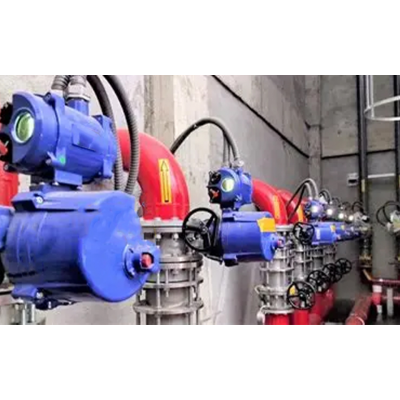
An electric butterfly valve is a type of valve that is driven by electricity and uses a disc-shaped valve flap to rotate within a 90-degree range to achieve opening or closing, and to regulate the flow. It is simple in design but plays a crucial role in many fields due to its simple structure, convenient operation, and lightweight size. Its core value lies in the ability to be remotely and automatically controlled, eliminating the need for manual operation to the site to turn the handwheel.
Water supply and sewage treatment systems
This is the most commonly encountered application scenario in daily life. On the main water supply lines of water treatment plants, electric butterfly valves are responsible for controlling large water flows. In sewage treatment plants, from the intake of water to the circulation in various treatment tanks, and finally to the discharge, they can be seen everywhere. They can precisely regulate the retention time of sewage in the biological tanks and can quickly cut off in case of abnormal pipeline pressure to prevent sewage backflow. For these scenarios, good sealing performance is a hard requirement. Many places also choose rubber-lined butterfly valves to prevent medium corrosion.
Heating, ventilation, air conditioning and building control
The cooling water system of high-rise buildings' central air conditioning. In the vast pipeline network, it is necessary to automatically adjust the cooling water flow entering the cooling water units according to the indoor temperature. Electric butterfly valves are very useful here. They automatically adjust the valve plate opening based on the signal from the temperature sensor, precisely control the heat exchange efficiency, and thus achieve energy-saving purposes.
Industrial production and process control
In factories such as chemical, pharmaceutical, and food and beverage industries, various fluid media need to be processed, such as raw liquid, acid-base solutions, steam, and gases. Electric butterfly valves can be integrated into automated control systems to achieve unmanned operation. For example, on the feeding pipeline of the reaction tank in a chemical plant, it can open at the preset program on time and deliver the precisely measured raw materials. In the cleaning process of the fermentation tank in a brewery, the CIP system is controlled by the electric butterfly valve to control the flow of cleaning liquid, which can handle high-temperature and acid-base media. The valve body material will be selected based on the medium characteristics, such as stainless steel or special alloys, to ensure safety and stability.
Energy and petroleum and natural gas fields
Electric butterfly valves undertake important responsibilities in key places such as power plants and natural gas distribution stations. In thermal power plants, it is responsible for controlling the circulating cooling water and desalination water pipelines. In petroleum pipelines, large-diameter electric butterfly valves are used to transport crude oil or refined oil. The key here is explosion-proof requirements. The drive device needs to be equipped with an explosion-proof motor to avoid sparks in flammable and explosive environments. For occasions that require rapid cutting, some specially designed butterfly valves have extremely fast response speeds.
Ships and marine engineering
The ballast water system, fire protection system, and domestic sewage system of ships all cannot do without electric butterfly valves. On a rocking ship, remote control is much safer and more efficient than manual operation by personnel to the bottom. At the same time, seawater is corrosive, so these valves usually use corrosion-resistant copper alloys or special coating treatments.
 +86 15122654356
 +86 15122654356
 sale2@tjlituo.com
 Xiaozhan Industrial Area, Xiaozhan Town, Jinnan District ,Tianjin , China