Project Case
Brazilian sewage treatment plant commonly used valves full scene introduction
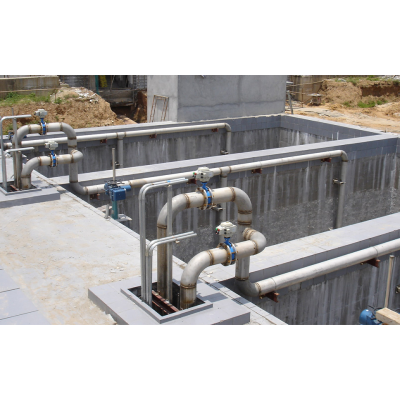
The pipeline system of the sewage treatment plant is composed of multiple process sections with different functions in series. From the coarse grille at the inlet, the inlet pump house, to the subsequent sedimentation tank, aeration tank, filtration system, and then to the final water discharge and sludge treatment link, the medium characteristics of different process sections are greatly different: The inlet carries a large amount of sediment, fiber and floating impurities, and the biochemical tank is a mixture containing activated sludge. The sludge pipeline is a high concentration viscous slurry, and the disinfection section is in contact with chemical agents. It is difficult for ordinary civil valves to operate stably for a long time in this complex multi-phase medium environment. The special valves suitable for different process segments are the core basic components to ensure the continuous smooth flow of the whole sewage treatment process and avoid the leakage of the medium.
Inlet lifting section commonly used valve
The inlet lifting section is the first pass of the sewage plant. The medium is raw sewage without pretreatment, containing a large number of impurities such as large particles of sediment, fiber and household garbage, which is most likely to cause problems such as valve blockage and sealing surface scratch.
In this process section, the most commonly used soft seal gate valve is used as the main shutdown equipment of the inlet pump house pipeline. The flow path is completely unobstructed in the fully open state, and there is almost no additional resistance to the water flow. It can effectively avoid the accumulation of large volume of debris in the valve cavity.
The second is the check valve, all installed in the outlet position of each lifting pump, when the pump suddenly shut down, quickly block the reverse flow of sewage, protect the lifting pump impeller from the water hammer impact damage, to avoid a large amount of sewage backpouring into the electrical room caused by equipment failure.
The core point of this stage selection is to give priority to the selection of products without grooves and dead Angle flow channels, to avoid fibers and sundry objects stuck in the valve cavity, resulting in subsequent opening and closing of the card astringent, lax closure.
Biochemical and precipitation process section commonly used valves
Biochemical tank and sedimentation tank are the core processing links of sewage treatment, and the medium is the mixture of sewage and activated sludge after preliminary filtration. The pipeline needs frequent flow adjustment, tank emptying, and medium switching operations, which have certain requirements for the adjustment accuracy and slight wear resistance of the valve.
The most widely used in this process is the regulating butterfly valve, which is installed in the intake pipe of the aeration tank and the sewage return pipeline. It can realize stepper adjustment of the flow through electric or pneumatic drive, accurately control the aeration air volume and sludge return flow, and ensure the stability of the microbial living environment in the biochemical tank. It is the core element of process parameter regulation.
The discharge pipeline at the bottom of the sedimentation tank is mostly equipped with a supporting sludge discharge valve, which is directly installed at the bottom of the pool. After opening, the deposited sludge at the bottom of the pool can be directly and quickly discharged, without silting up in the pipeline. The structure is simple and not easy to jam, and the daily maintenance is very convenient.
The core point of this stage selection is to give priority to the selection of products with stable sealing performance and good adjustment linearity to ensure long-term stability and controllability of process parameters.
Depth filtration and water section commonly used valves
The medium in the depth filtration and effluent section is purified sewage after multiple rounds of treatment, and the water clarity is greatly improved. The core demand of the pipeline is low leakage and high reliability in long-term operation, so as to ensure that the final effluent meets the standard and is discharged stably.
This process section mostly uses stainless steel soft seal gate valve as the pipeline turn-off equipment, the valve body has stronger corrosion resistance, long-term contact with purified water will not appear obvious corrosion, stable sealing performance, long-term operation under the leakage rate is very low, as the main turn-off equipment used as the water main pipe.
At the same time, the water main pipe will be equipped with hydraulic control valve to automatically adjust the pressure fluctuation in the pipeline, offset the water hammer impact caused by the start and stop of the pump, protect the long-distance water outlet pipe from tube burst due to pressure sudden change, and ensure the long-term safety of the water delivery system.
The core point of this stage selection is to give priority to the selection of corrosion resistant and reliable sealing products to avoid leakage in the later stage and affect the final water quality.
Common valve in sludge treatment section
The medium of the sludge treatment section is high concentration of thick sludge, containing a lot of hard sand and winding fiber, which is the most prone to valve blockage and wear of the whole sewage plant. Ordinary gate valves and ball valves are completely unable to adapt to such conditions.
This process section almost all choose knife gate valve as the core control equipment, its gate edge is a blade shape, when closed, you can directly cut off the winding fiber, do not give the fiber stuck, at the same time, the valve body is full diameter non-groove design, there is no dead Angle can silt sludge in the flow channel, high concentration of sludge will not appear when the blockage. For the sludge condition with high sand content, hard sealing knife gate valve with wear-resistant alloy can also be used to surfacing the sealing surface, greatly extending the wear-resistant service life and reducing the operation and maintenance workload of frequent replacement.
The core point of this stage selection is to give priority to the selection of full-diameter knife gate valve with shear function to avoid sludge blockage from the root cause of the structure.
The core logic of valve selection in different process sections is always centered on the characteristics of the corresponding medium. Instead of the inertia of "only selecting according to caliber and pressure" in ordinary water pipelines, the corresponding special valves are matched according to the impurity content, wear characteristics and corrosion level of different media, so as to reduce the frequency of valve failure in the later stage from the source and reduce unnecessary downtime and maintenance costs. Ensure the continuous and stable operation of the whole sewage treatment plant throughout the year.
 +86 15122654356
 +86 15122654356
 sale2@tjlituo.com
 Xiaozhan Industrial Area, Xiaozhan Town, Jinnan District ,Tianjin , China